

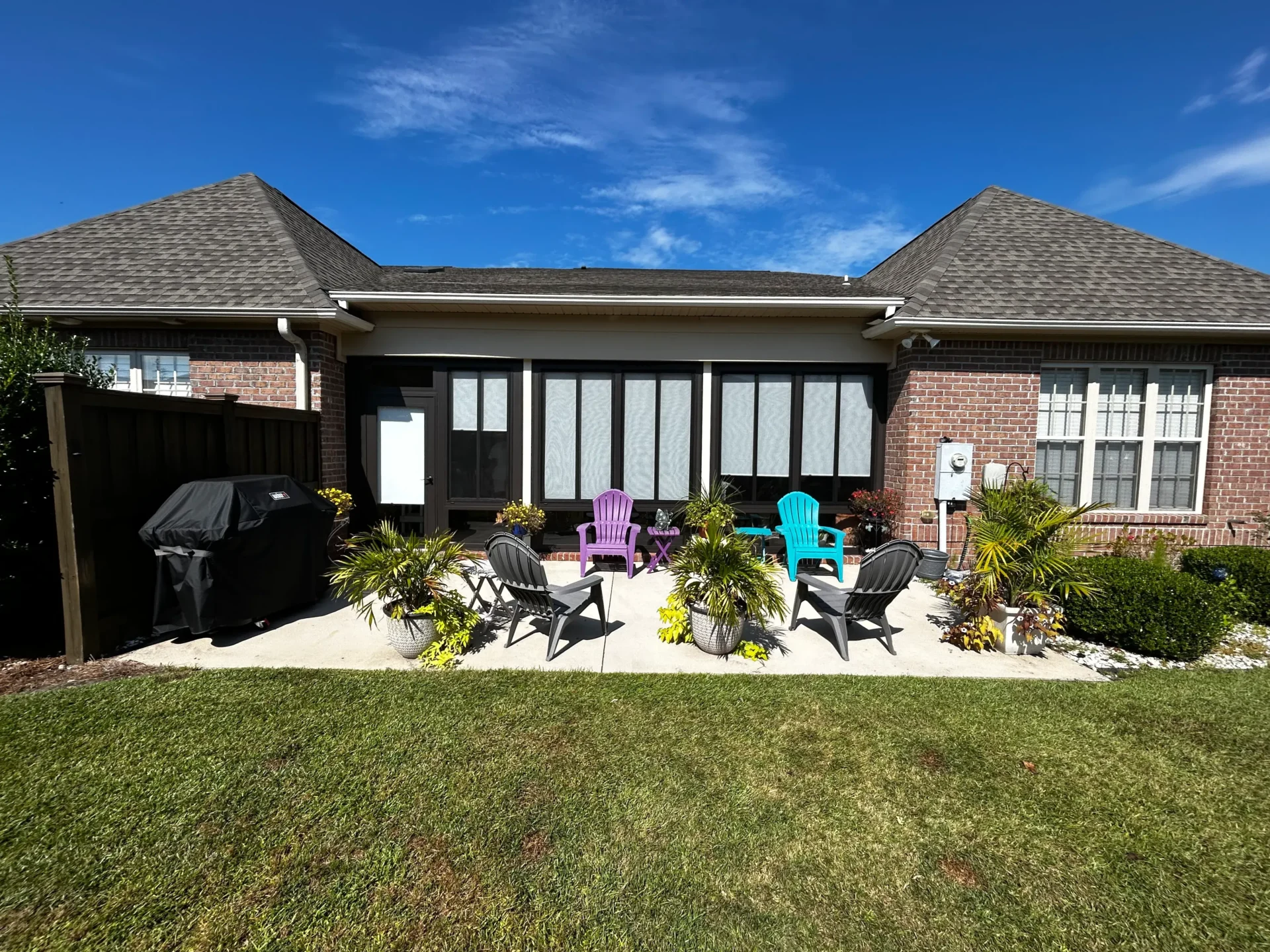
If you live in Wilmington or anywhere along coastal North Carolina, you already know what humidity feels like. Sticky summers, salt air, and afternoon thunderstorms are just part of life here. So when you’re adding outdoor living space to your home, the climate isn’t just a background detail. It’s one of the biggest factors shaping which structure actually makes sense for your property.
Both sunrooms and covered patios are popular choices. But they behave very differently in high-humidity environments. If you’re trying to figure out which one fits your needs, this breakdown covers everything you need to know, including real trade-offs most contractors don’t tell you upfront.
Thinking about adding an outdoor living space to your home? Speak with a specialist about your options before committing to a design.
As a sunroom builder in Wilmington, we’ve worked with hundreds of homeowners who came to us after choosing the wrong structure for the climate. Here’s what we’ve learned.
How Humidity Actually Affects Outdoor Structures
Humidity doesn’t just make you sweat. Over time, it causes materials to swell, mold to grow, and hardware to corrode. In Wilmington, average summer humidity levels regularly sit above 80%, and salt air adds extra corrosive stress to metal components.
This means that material choices matter more here than in drier climates. Wood-framed structures absorb moisture. Uncoated metals rust faster. And any space that traps warm, moist air without proper ventilation becomes a breeding ground for mildew.
Both sunrooms and covered patios face these challenges. But they handle them in very different ways.
Sunrooms in Humid Climates: The Full Picture
A sunroom is an enclosed, glass-walled addition that connects to your home. Depending on the model, it can be a three-season space or a fully insulated, climate-controlled room you use year-round.
The Pros of a Sunroom in Humid Weather
Sunrooms give you a sealed barrier between the outdoor environment and your living space. Here’s where they shine in humid conditions:
- Climate control is possible. A four-season or insulated sunroom can be heated and cooled, which lets you regulate both temperature and humidity inside the space. That’s a big deal in a coastal climate.
- Protection from insects and rain. Wilmington’s rainy season can last for months. A fully enclosed sunroom keeps you comfortable even during heavy downpours.
- Low-maintenance materials. Modern sunrooms built with aluminum framing and thermally broken glass don’t rust, rot, or warp the way wood does. The energy-saving benefits of insulated sunrooms also make them more cost-effective to run year-round compared to open structures.
- Better indoor air quality. With the right ventilation or HVAC integration, you can keep indoor humidity at a comfortable level, which protects your furniture and flooring.
The Cons of a Sunroom in Humid Weather
Sunrooms aren’t without their challenges. A few things to keep in mind:
- Condensation risk: In high-humidity climates, improperly sealed or under-insulated sunrooms can develop condensation on interior glass surfaces. This happens when the warm, moist outdoor air meets cooler glass. Proper glazing and insulation help prevent this, but it’s worth asking your contractor about it directly.
- Higher upfront cost: A fully insulated sunroom costs more than a basic covered patio. If you’re comparing options on a budget, that gap matters. You can get a clearer picture of what to expect by reviewing sunroom installation costs in coastal NC.
- Permit requirements: In North Carolina, enclosed sunrooms are typically treated as living space additions and require building permits. That adds time and paperwork to the project.
Covered Patios in Humid Climates: The Full Picture
A covered patio is an open or semi-open outdoor area with a roof structure above it. Options range from simple aluminum patio covers to insulated acrylic panels that block heat and UV rays. They’re less enclosed than sunrooms but offer plenty of shade and weather protection.
The Pros of a Covered Patio in Humid Weather
Covered patios work well in coastal climates for a few specific reasons:
- Natural airflow: Because they’re open or semi-open, covered patios don’t trap heat and humidity the way an enclosed space can. The breeze does a lot of the work for you.
- Lower cost: A covered patio is generally less expensive to build than a sunroom. For homeowners who want shade and rain protection without a major construction project, it’s a practical starting point.
- Faster build time: Covered patios involve less structural work, fewer permits in many cases, and simpler material logistics. They typically come together faster than a full sunroom addition.
- Open-air feel: Some people just prefer being outside. A covered patio gives you that open connection to your yard while still keeping you dry.
The Cons of a Covered Patio in Humid Weather
Here’s where covered patios can fall short in a high-humidity environment:
- No temperature control: On a humid July afternoon in Wilmington, a covered patio keeps the sun off you, but it doesn’t do much about the heat or moisture in the air. You’re still outside.
- Material degradation over time: Wood decking and framing take a beating in salty, humid air. Without regular sealing and maintenance, you’re looking at warping, rot, and premature wear. Aluminum and composite materials hold up better, but they come at a higher cost.
- Insect exposure: Mosquitoes, gnats, and no-see-ums are a real part of summer life in coastal NC. An open patio offers no protection.
- Limited seasonal use: In the hottest and most humid months, an uncooled outdoor space simply isn’t comfortable for an extended time. You may find yourself barely using it from June through September.
Side-by-Side Comparison
Here’s a quick look at how the two options stack up across the factors that matter most in humid coastal climates:
| Feature | Sunroom | Covered Patio |
| Humidity Control | Yes (with HVAC or ventilation) | No |
| Rain Protection | Full | Partial |
| Insect Protection | Full | None |
| Year-Round Usability | Yes (insulated models) | Limited |
| Upfront Cost | Higher | Lower |
| Maintenance Needs | Low (aluminum/glass) | Moderate to High |
| Natural Airflow | Limited | Good |
| Permit Complexity | Higher | Lower |
So Which One Should You Choose?
Honestly, it depends on how you want to use the space. A covered patio is a great starting point if you’re looking for affordable shade and don’t mind being outside in the heat. But if you want a space that’s genuinely comfortable through Wilmington’s long, hot, humid summers, a properly insulated sunroom is the more practical investment.
A few questions worth asking yourself:
- Do you want to use the space year-round, or just on mild days?
- How important is climate control to you and your family?
- Are you prioritizing budget now, or long-term value?
- Do you have small children or older family members who are more sensitive to heat and humidity?
If your answers lean toward comfort and year-round use, a sunroom makes more sense. If you primarily want a shaded place to grill or relax on nice evenings, a covered patio does the job well.
Frequently Asked Questions
Does humidity cause problems inside a sunroom?
It can, if the sunroom isn’t properly insulated or ventilated. Moisture from warm outdoor air meeting cooler glass surfaces can cause condensation. Insulated glass panels and good ventilation design prevent this in most cases.
Are covered patios low-maintenance in coastal NC?
It depends on the materials. Wood-framed patios require regular sealing and inspection. Aluminum-framed structures with composite or aluminum decking hold up much better in salty, humid conditions with very little upkeep.
Can I add screens or enclosures to a covered patio later?
Yes. Many homeowners start with a covered patio and later add screen panels, porch windows, or even convert it into a three-season room. It’s a common upgrade path.
Which option adds more value to a home in Wilmington?
Generally, an insulated sunroom adds more measurable value because it counts as additional conditioned square footage. A covered patio adds livable outdoor space, but typically doesn’t increase square footage in the same way.
What’s the best material for a sunroom or patio cover in a humid climate?
Aluminum framing is the standard recommendation for coastal and humid environments. It doesn’t rust, warp, or rot, and it requires very little maintenance compared to wood.
Get the Right Advice for Your Home
Every property in Wilmington is different. Lot size, sun exposure, existing structure, and personal lifestyle all factor into which option makes the most sense. A good conversation with an experienced contractor is often the fastest way to get clarity. Eastern Sunrooms has been helping Wilmington homeowners build the right outdoor living spaces for over a decade. Reach out to our team to talk through your options with someone who knows the coastal NC climate firsthand.