
You’ve got a backyard, a side yard, or maybe just a bare concrete slab behind your house. And you keep thinking there’s something more you could do with it. The problem isn’t the desire; it’s figuring out where to start and which option actually makes sense for your home, your budget, and the way your family lives.
This guide breaks down the most practical ways to add outdoor living space to a home in Wilmington and coastal North Carolina, along with what each option actually involves, so you can make a clear-headed decision.
Want to talk through your specific space with someone who knows coastal NC? Reach out to our team for a no-pressure conversation about your options.
Homeowners in the Wilmington area who are serious about custom sunrooms in Wilmington and other outdoor living additions often find that getting a clear picture of all their options first saves them time and money down the road.
Start with How You Actually Want to Use the Space
Before picking a structure, it’s worth being honest about how you plan to use it. A lot of homeowners make the mistake of choosing based on aesthetics alone, then realize six months later that the space doesn’t work for their lifestyle.
Ask yourself:
- Do you want a space you can use year-round, or mostly on mild days?
- Will this be for relaxing, entertaining, working from home, or all three?
- Do you have kids or pets who need a safe, enclosed area?
- How much do bugs, heat, and rain affect your outdoor enjoyment right now?
Your answers to these questions will narrow down your options faster than any budget calculation.
Your Main Options for Adding Outdoor Living Space
Here’s a practical look at the most common additions, from simplest to most substantial.
1. Covered Patio or Patio Cover
A covered patio is one of the most straightforward ways to extend your outdoor living space. You’re essentially adding a roof over an existing or new concrete slab so you can sit outside without direct sun or rain exposure.
Patio covers come in a few different styles:
- Aluminum patio covers are low-maintenance, durable in coastal conditions, and come in solid or louvered panel designs
- Insulated patio covers add a layer of foam core between the panels, which helps reduce heat transfer and keeps the covered area noticeably cooler
- Acrylic patio covers allow natural light to filter through while still providing weather protection
A covered patio is a good fit if you want shade and rain protection without enclosing the space entirely. It’s also one of the more budget-friendly starting points for outdoor improvements.
2. Deck Addition or Expansion
If your home doesn’t have an elevated outdoor platform, adding a deck creates a natural transition from your interior to your yard. Decks work especially well on homes with rear exits that are slightly elevated above grade.
For coastal and humid climates like Wilmington, material selection matters a lot. Traditional wood decking requires regular sealing and maintenance to hold up against moisture and salt air. Composite and aluminum decking systems are increasingly popular because they resist rot, warping, and insect damage without the ongoing upkeep.
A deck pairs well with other additions. Many homeowners start with a deck and later add a covered roof structure, railings, or even a full porch enclosure above it.
3. Screen Room or Porch Enclosure
A screen room gives you bug protection and weather filtering without the cost or construction of a full sunroom. It’s essentially an existing or new porch space fitted with screen panels, porch windows, or a combination of both.
Screen rooms are a solid middle ground. They let the breeze through, keep insects out, and make outdoor time far more enjoyable during spring and fall in coastal NC. They’re also a popular first step before a full porch conversion.
If you already have a covered porch, converting it into a screened or partially enclosed space is often more affordable than building from scratch. The top porch enclosure ideas for homeowners in this region range from simple screen panels to full WeatherMaster window systems that give you a proper three-season room.
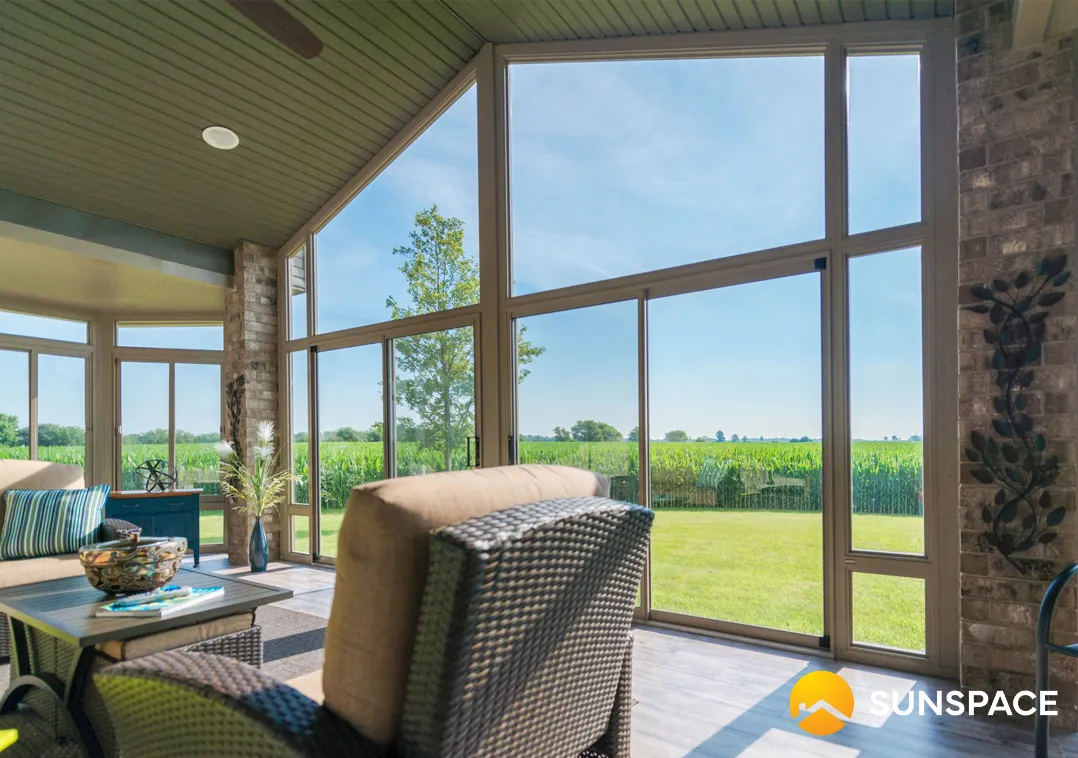
4. Three-Season or Four-Season Sunroom
A sunroom takes the idea of a screened porch and builds on it significantly. You’re adding glass walls, a proper roof system, and, in the case of a four-season sunroom, full insulation and climate control.
Three-season sunrooms are usable for most of the year but aren’t conditioned spaces. They’re great for spring and fall, but can get warm in July. Four-season sunrooms, by contrast, are fully insulated with thermally broken frames and Low-E glass. They function like an additional room of the house and can be heated and cooled year-round.
For Wilmington homeowners who want to genuinely expand their living square footage, an insulated sunroom is the most substantial investment you can make in outdoor living space. It also tends to add measurable value to the home in a way that open-air additions don’t.
5. Louvered Pergola
A louvered pergola is a freestanding or attached structure with adjustable roof slats. You can open the louvers to let sun and air in, or close them to block rain and direct sunlight. Some systems are motorized and can be adjusted with a remote or smartphone app.
Louvered pergolas are popular with homeowners who want a flexible, open-air aesthetic without committing to a fully enclosed structure. They work well as standalone outdoor dining or lounge areas, and they can be combined with retractable screens for added protection.
6. Privacy Walls and Windbreaks
Sometimes the issue isn’t overhead exposure but lateral exposure. If your outdoor space feels too open, too visible from neighbors, or too exposed to wind, a privacy wall or windbreak panel can make the space feel like a proper room without enclosing it fully.
These are often installed alongside decks, patios, or pergolas as finishing elements rather than standalone additions.
Comparing Your Options at a Glance
| Option | Year-Round Use | Bug Protection | Climate Control | Relative Cost |
| Covered Patio | Partial | No | No | Lower |
| Deck Addition | Partial | No | No | Moderate |
| Screen Room | Partial | Yes | No | Moderate |
| Three-Season Sunroom | Most of the year | Yes | Partial | Moderate-High |
| Four-Season Sunroom | Yes | Yes | Full | Higher |
| Louvered Pergola | Partial | Optional | No | Moderate-High |
What to Think About Before You Build
A few practical considerations that often get overlooked early in the planning process:
Setback rules and permits: In North Carolina, most outdoor additions require a building permit, and setback rules determine how close to your property lines you can build. It’s worth reviewing sunroom setback rules in North Carolina before you get too attached to a specific footprint or location on your lot.
Your existing structure: Some additions attach directly to your home’s exterior wall. The condition of that wall, the existing roof line, and your foundation type all affect what’s possible and what the build will cost.
HOA restrictions: If your neighborhood has a homeowners association, check their guidelines before finalizing any plans. Certain structures, colors, or materials may require prior approval.
Material choices for coastal conditions: Aluminum-framed structures with powder-coated finishes handle salt air and humidity far better than wood or untreated metals. Whatever you build, materials matter more in Wilmington than in drier climates.
Which Option is Right for You?
There’s no single right answer. A lot depends on your budget, your lot, your existing structure, and how you actually plan to use the space.
If you want something simple and affordable, a covered patio or screen room is a practical starting point. If you want to genuinely expand your living space and use it in all seasons, an insulated sunroom is worth the investment. And if you like flexibility and an open-air feel, a louvered pergola with optional screens gives you a lot of control over how enclosed or open the space feels on any given day.
The best approach is usually to think about what you want three years from now, not just what fits the budget this month.
Frequently Asked Questions
What’s the most affordable way to add an outdoor living space?
A covered patio or basic porch screen enclosure tends to be the most affordable starting point. Costs vary based on size, materials, and site conditions, but these options generally involve less structural work than a full sunroom addition.
Do I need a permit to build a covered patio or sunroom in Wilmington?
Most structural additions in North Carolina require a building permit, including sunrooms and many covered patio structures. Your contractor should handle the permit process, but it’s worth confirming this before work begins.
Can I add a sunroom to an existing porch or deck?
Yes, and it’s a common approach. An existing covered porch or deck can often serve as the foundation for a screen room or sunroom enclosure, which can reduce the overall build cost compared to starting from scratch.
How long does it take to add a sunroom in Wilmington?
Timelines vary depending on the type of project, permit approval, and material lead times. Most sunroom installations in the area run roughly 12 to 18 weeks from contract to completion.
Will adding an outdoor living space increase my home value?
In most cases, yes. Enclosed, conditioned spaces like four-season sunrooms tend to add the most measurable value. Covered patios and decks also improve marketability, though they typically don’t add square footage to the home’s appraisal value.
Talk to Someone Who Knows the Area
Every property in Wilmington is different. Lot layout, sun exposure, HOA rules, and your home’s existing structure all shape what makes sense. Eastern Sunrooms has helped homeowners across coastal North Carolina add functional, well-built outdoor living spaces for over a decade. Contact our team to talk through what’s possible for your specific property.