
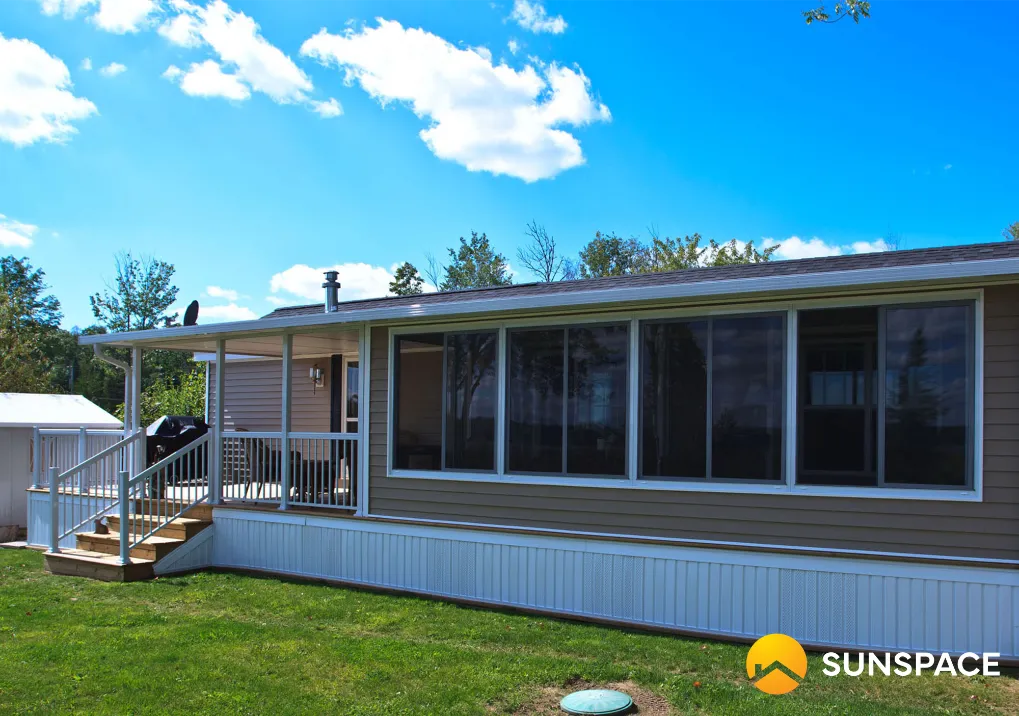
If you’re in Wilmington, NC, and planning to enclose a patio or porch, the hardest part is often the wording. People say “sunroom,” “patio enclosure,” “porch enclosure,” and “screen room” interchangeably, but they can mean very different comfort levels, materials, and expectations.
In this guide, you’ll get clear definitions, a side-by-side comparison, and a simple way to choose based on how you want to use the space in real coastal weather.
If you’re researching custom-manufactured sunrooms in Wilmington, the comparisons below will help you see where they fit compared with simpler enclosure options.
The Quick Answer (Bottom Line)
A sunroom is typically a one-story attached addition with lots of glazing, and it can range from an unconditioned space to a fully heated and cooled room. Building code language commonly ties sunrooms to a high percentage of glazing across exterior walls and roof, which is why they usually look “glass-heavy.”
A patio enclosure is a broader everyday term. In Wilmington, it usually means either a screened enclosure that keeps airflow and blocks insects, or a windowed enclosure that blocks wind and rain and may or may not be insulated or conditioned.
What Counts As A Sunroom (Definition And Feel)
Sunrooms have a formal definition, but how they live day to day matters just as much. If you want bright light, outdoor views, and a more indoor style space, you’re generally thinking “sunroom.”
Under the International Residential Code, a sunroom is defined as a one-story structure attached to a dwelling with glazing in excess of 40 percent of the gross area of the structure’s exterior walls and roof. Because that definition is broad, terms like patio rooms, porch enclosures, solariums, and conservatories can sometimes fall under the “sunroom” umbrella, depending on the design.
Sunroom Categories And What “Conditioned” Means
This is the part many articles skip, and it’s where decisions get easier. The IRC framework references AAMA/NPEA/NSA 2100 and groups sunrooms into categories that range from nonhabitable and unconditioned to habitable and conditioned.
In plain language, “conditioned” means the space is heated or cooled in a controlled way. In the IRC categories, a key difference is whether the sunroom is thermally isolated from the house or integrated in a way that supports year-round use.
What People Mean By “Patio Enclosure” In Wilmington
“Patio enclosure” isn’t one strict product type. It’s the label most homeowners use when they want to make an outdoor slab or patio more usable.
In coastal North Carolina, patio enclosures usually land in one of these buckets:
- Screen room enclosure that keeps bugs out while staying open to outdoor air.
- Windowed patio enclosure that blocks wind, rain, and pollen better than screens.
Screen Rooms Vs Windowed Enclosures
A screen room still feels like outdoors, just cleaner and calmer. It’s often the quickest way to get more use from a patio, especially in mosquito season, but screens do not give the same temperature protection as glass.
A windowed patio enclosure can feel closer to a sunroom, but performance depends on the frame quality, glass, roof system, and whether insulation and HVAC are part of the plan. Some windowed enclosures are clearly “three-season,” while others are built to support near year-round comfort.
Sunroom Vs Patio Enclosure (Side By Side)
The wording gets fuzzy fast, so focus on performance and intent instead of labels.
| Feature | Sunroom | Patio Enclosure |
| Core idea | A glass-forward attached structure that often meets the IRC sunroom definition. | A broad term, most often a screen room or windowed enclosure. |
| Comfort range | Can be unconditioned or fully conditioned, depending on the category. | Often unconditioned, windowed versions can reduce wind and rain. |
| Connection to the house | Can be thermally isolated or more integrated, depending on category and design. | Usually treated as an outdoor living upgrade rather than an interior living area. |
| Best fit | You want longer season use and better control of heat, humidity, and comfort. | You want shade and bug protection, and you’re fine with outdoor temperatures. |
Comfort, Energy, And Year-Round Use
Wilmington’s weather is the real decision maker. Humidity sticks around, summer sun is intense, and salty air can be rough on low-quality materials.
Energy rules are straightforward. If you heat or cool the sunroom, energy code requirements apply, and the design should match how the space will be conditioned. The National Sunroom Association overview also explains that some unconditioned sunroom categories may be exempt from certain insulation and air leakage requirements, while conditioned categories have tighter expectations.
A practical way to decide is to pick your comfort target first. Do you want “comfortable in the shoulder seasons,” or “comfortable whenever you walk in”?
Permits, Inspections, And Coastal Planning
Permits are easy to ignore until they become a problem during resale or insurance questions. Requirements vary by location and scope, but sunrooms commonly involve permitting and inspections, so it’s smart to confirm early.
Code documentation matters too. The IRC framework expects the sunroom category to be identified in the construction documents, since the category can affect design and performance requirements.
Coastal conditions also raise the bar. North Carolina’s Residential Code includes wind design information, and coastal areas can fall into higher wind requirements based on mapped criteria, which is why product ratings and attachment details matter around Wilmington.
How To Choose The Right Option
Choosing gets easier when you start with use, then match the structure to that goal. You don’t need a fancy formula. You need honest answers.
Ask yourself:
- How many months per year do you want to use the space comfortably?
- Do you want breezes, or do you want a sealed space that helps with pollen and humidity?
- Are you adding heating and cooling, or keeping it as a true outdoor space with fans?
- What’s the base: a slab patio, pavers, or a raised deck?
- Will you use indoor furniture and electronics out there, or outdoor-rated pieces only?
Simple rule of thumb. If you want real temperature control, you’re usually in sunroom territory. If your main goal is bugs and rain, a patio enclosure or screen room is often the better starting point.
FAQs
Can a patio enclosure become a sunroom later?
Sometimes. It depends on the foundation, framing, and whether the original build was engineered for more weight and tighter performance.
Is a sunroom always four seasons?
No. The IRC recognizes multiple sunroom categories, including unconditioned and conditioned options, and those categories affect how the space performs and how it is treated in code language.
Will a sunroom need HVAC in Wilmington?
If you want dependable comfort through summer humidity, some form of cooling is often part of the plan. If the space is heated or cooled, it also ties into energy requirements.
Next Step: Get A Quick Recommendation
If you’re still deciding between a sunroom and a patio enclosure, reach out to Eastern Sunrooms for a short consult. We’ll help you match the right enclosure type to your goals, your home’s layout, and Wilmington’s coastal conditions, so you can move forward with fewer surprises.