

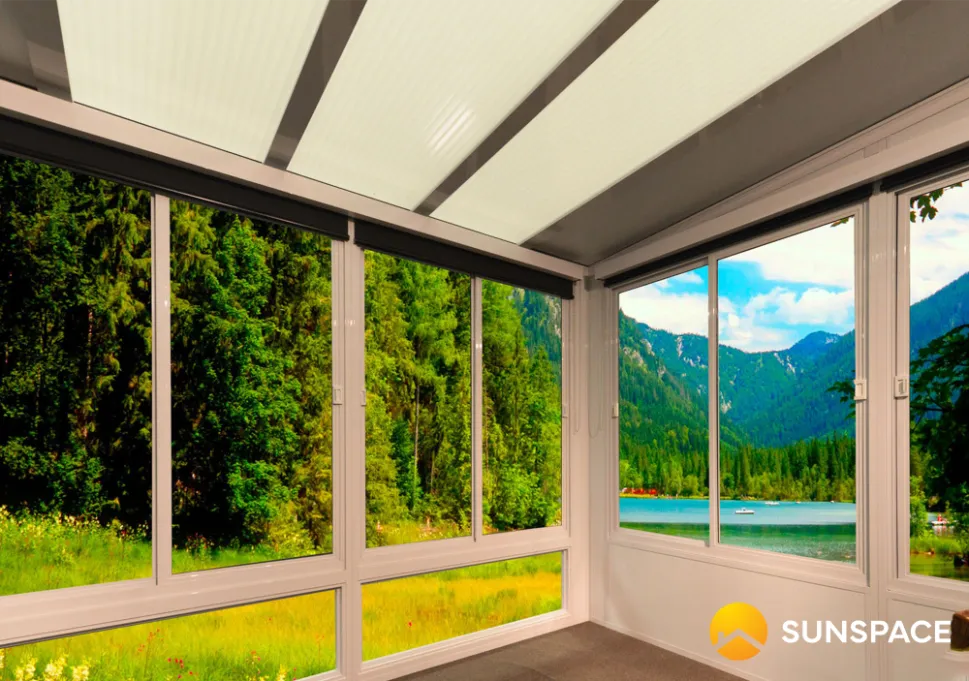
For most Wilmington-area homeowners, the choice between a 3-season and 4-season sunroom comes down to one question:
How do you want to use the room?
If your goal is to enjoy fresh air, natural light, outdoor views, and protection from bugs and rain during much of the year, a 3-season sunroom may be exactly what you need.
If you want a true extension of your home’s living space that can be insulated, heated, and cooled for year-round use, a 4-season sunroom is usually the better choice.
But there is another important distinction many homeowners do not realize. Not all 3-season sunrooms are the same.
At Eastern Sunrooms, homeowners can choose from three distinct Sunspace systems:
- The Model 200 WeatherMaster Vinyl Sunroom
- The Model 300 Glass Sunroom
- The Model 400 Insulated Four-Season Sunroom
Each creates a different type of space. The right choice depends on your budget, how much ventilation you want, whether you prefer vinyl or real glass, and how important year-round temperature control is to you.
Let’s break down the differences.
Quick Answer: What Is the Biggest Difference Between a 3-Season and 4-Season Sunroom?
A 3-season sunroom is designed to help you enjoy your outdoor space during the milder parts of the year while providing protection from insects, rain, wind, and debris. These rooms typically rely on natural ventilation rather than full insulation and permanent climate control.
A 4-season sunroom is built more like a true living-space addition. It uses insulated wall systems, higher-performance glass, thermal breaks, and an insulated roof system to improve year-round comfort.
In Wilmington and coastal North Carolina, the choice is not always as simple as spring, summer, fall, or winter. Our long stretches of mild weather can make a 3-season room practical for much of the year, while heat, humidity, direct sun exposure, salt air, and occasional cold weather can make a true 4-season room worth the investment for homeowners who want consistent comfort.
The Three Sunroom Options Eastern Sunrooms Installs
Before deciding between a 3-season and 4-season room, it helps to understand the three systems available.
Model 200 WeatherMaster Vinyl Sunroom
The Model 200 is a 3-season sunroom built for homeowners who want maximum ventilation, protection from insects and weather, and a strong connection to the outdoors.
Instead of traditional glass, the WeatherMaster Vertical 4-Track window system uses flexible ViewFlex vinyl glazing. The panels can be moved to create up to 75% ventilation, making this one of the best choices for homeowners who enjoy fresh air and want their porch or patio to feel open whenever the weather cooperates.
The Model 200 is especially well suited for:
- Converting an existing porch, deck, or covered patio
- Keeping out mosquitoes, pollen, wind, and rain
- Maximizing natural ventilation
- Creating a comfortable place to relax, dine, or entertain
- Homeowners who do not need a fully insulated, climate-controlled room
For many Wilmington-area homeowners, the Model 200 offers the balance they are looking for: more protection than a screen room without the cost or complexity of a full four-season addition.
Model 300 Glass Sunroom
The Model 300 is also a 3-season room, but instead of ViewFlex vinyl, it uses single-glazed tempered safety glass.
This is an important distinction.
Some homeowners want the ventilation and simplicity of a 3-season room but prefer the appearance, clarity, and feel of traditional glass. The Model 300 fills that space between a vinyl-window sunroom and a fully insulated four-season addition.
The dual-sash glass windows can provide up to 50% ventilation.
The Model 300 may be the right choice if:
- You prefer real glass over flexible vinyl
- Natural light and clear outdoor views are priorities
- You want a more traditional sunroom appearance
- You want an enclosed porch or patio without full four-season construction
- You do not need continuous year-round temperature control
For homeowners comparing Model 200 vs. Model 300 sunrooms, the biggest decision is often simple: Do you prioritize maximum ventilation and flexible vinyl, or the look and feel of real glass?
Model 400 Insulated Four-Season Sunroom
The Model 400 is the true four-season option.
It is designed for homeowners who want their sunroom to function more like a permanent extension of the home rather than a porch that has been enclosed.
The system includes heavy-gauge 3-inch aluminum framing, high-density 3-inch insulated wall panels, commercial-grade thermal breaks, double-glazed Low-E Argon glass, and an insulated thermal roof.
Those construction differences matter.
Thermal breaks help reduce heat transfer through the aluminum framing. Low-E Argon insulating glass helps control heat moving into and out of the room. Insulated wall and roof systems create a much more controlled environment than a standard 3-season room.
The Model 400 may be the better choice if:
- You want to use the room comfortably throughout the year
- The space will serve as an office, den, dining area, playroom, or other living area
- Energy efficiency and temperature control are important
- You want better insulation against summer heat and winter cold
- You want the sunroom to feel more like part of the house
Model 200 vs. Model 300 vs. Model 400: Side-by-Side Comparison
| Feature | Model 200 Vinyl | Model 300 Glass | Model 400 Insulated |
|---|---|---|---|
| Season use | 3-season | 3-season | True 4-season |
| Frame | 2-inch extruded vinyl with foam core | 2-inch insulated aluminum | Heavy-gauge 3-inch aluminum |
| Window material | WeatherMaster ViewFlex vinyl | Tempered safety glass | Double-glazed Low-E Argon glass |
| Ventilation | Up to 75% opening | Up to 50% opening | Operable windows with tight weather seal |
| Thermal breaks | No | No | Yes, commercial-grade |
| Wall insulation | 2-inch foam core | 2-inch foam core | 3-inch high-density foam panels |
| Best for | Maximum airflow and porch conversions | Traditional glass appearance | Year-round living |
| Temperature control | Seasonal | Seasonal | Designed for year-round comfort |
| Investment level | Generally most affordable | Mid-range | Premium |
Is a 3-Season Sunroom Practical in Wilmington’s Coastal Climate?
For many homeowners, yes.
Wilmington and southeastern North Carolina enjoy long periods of mild weather, which means a well-designed 3-season room may be usable for much of the year.
But there is no one-size-fits-all answer.
The comfort of any sunroom depends on several factors:
- Which direction the room faces
- How much direct afternoon sun it receives
- Existing trees and shade
- Roof insulation
- Window configuration
- Ventilation
- Ceiling fans
- The size and orientation of the room
- How sensitive you are to heat or cold
A shaded Model 200 room with generous ventilation can feel very different from a west-facing room exposed to intense afternoon sun.
That is why choosing a sunroom based only on the label “3-season” or “4-season” can be misleading. The room should be selected for your specific property, how you plan to use it, and the conditions around your home.
How Does Wilmington’s Humidity Affect the Decision?
Humidity matters when planning any enclosed outdoor living space in coastal North Carolina.
A 3-season room is designed around ventilation and outdoor living. Opening the windows allows air to move through the space, which can make the room feel more connected to the outdoors.
A true 4-season room provides greater control because the structure is built with insulation, thermal breaks, and higher-performance glass. When properly designed with appropriate heating and cooling, it can maintain a more consistent indoor environment.
This is particularly important for homeowners planning to use the room as:
- A home office
- A family room
- A dining area
- A children’s playroom
- A hobby or craft room
- A fitness area
- A true everyday living space
If you expect the room to function like another room in your house, the Model 400 deserves serious consideration.
Which Sunroom Is Best for Your Lifestyle?
The specifications matter, but your daily life matters more.
Here is the simplest way to think about the decision.
Choose a Model 200 WeatherMaster Vinyl Sunroom if:
- You want maximum airflow and enjoy opening the room to fresh coastal breezes.
- You want to convert an existing porch, deck, or patio into a more protected space.
- Keeping out bugs, rain, pollen, and wind is one of your primary goals.
- You like the flexibility of opening up to 75% of the window area.
- You do not need the room to function exactly like a fully insulated indoor room.
Choose a Model 300 Glass Sunroom if:
You prefer real glass over flexible vinyl.
Clear views and a traditional sunroom appearance are important to you.
You want ventilation without moving to a fully insulated four-season system.
You want an enclosed porch or patio that feels more substantial but will primarily be used during comfortable weather.
Choose a Model 400 Four-Season Sunroom if:
You want to enjoy the room throughout the year.
You plan to use it as true living space.
You want better control over summer heat, winter cold, and condensation.
You want insulated walls, an insulated roof, thermal breaks, and Low-E Argon glass.
You expect the sunroom to feel like a natural extension of your home.
How Much More Does a 4-Season Sunroom Cost?
A 4-season sunroom generally costs more than a 3-season room because the construction systems are significantly different.
A true four-season room may require:
- Higher-performance insulating glass
- Thicker insulated wall panels
- Thermal breaks within the framing
- An insulated roof system
- Heating and cooling considerations
- Additional electrical work
- Different foundation or flooring requirements
Size also matters, but square footage is only part of the equation. Site conditions, existing structures, rooflines, foundation needs, window configuration, doors, permits, and finish selections can all affect the final investment.
For a more detailed breakdown, read our Sunroom Cost in Wilmington, NC guide.
Can You Heat and Cool a 3-Season Sunroom?
You can use supplemental heating or cooling in some 3-season rooms, but that does not make them equivalent to a true four-season structure.
A portable heater, ceiling fan, or other supplemental system may help make a 3-season room more comfortable during certain weather conditions. However, a Model 200 or Model 300 does not have the same thermal construction as a Model 400.
If maintaining a consistent indoor temperature throughout the year is essential, start with a structure designed for that purpose.
Trying to force a seasonal room to behave like a fully insulated room can lead to disappointment.
What About Coastal Salt Air, Wind, and Storm Conditions?
Living near the North Carolina coast means your sunroom must deal with more than sunshine.
Salt air, humidity, wind exposure, strong UV rays, and storms all affect exterior building materials.
The right sunroom system should be selected based on your home’s location and exposure. A property near the water may face different conditions than a sheltered inland home several miles away.
We handle sunroom installation throughout Wilmington and southeastern North Carolina and can help evaluate factors such as:
- Wind exposure
- Salt-air exposure
- Existing roof structure
- Foundation conditions
- Drainage
- Sun orientation
- Shade
- Local permitting requirements
The best sunroom is not simply the most expensive model. It is the system that fits your home, your environment, and how you actually plan to use the space.
Can You Convert an Existing Screened Porch Into a 3-Season or 4-Season Sunroom?
Often, yes.
An existing screened porch may be an excellent candidate for conversion, particularly when the roof, framing, foundation, and overall structure are in good condition.
A Model 200 WeatherMaster room is often a natural fit for homeowners who already have a covered porch and want greater protection from insects and weather while maintaining excellent ventilation.
Other properties may be better suited for a Model 300 glass enclosure or a fully insulated Model 400 room.
The existing structure needs to be evaluated before making that decision.
Eastern Sunrooms can assess:
- The existing roof
- Structural framing
- Openings
- Flooring or foundation
- Water drainage
- Electrical needs
- Desired window and door configuration
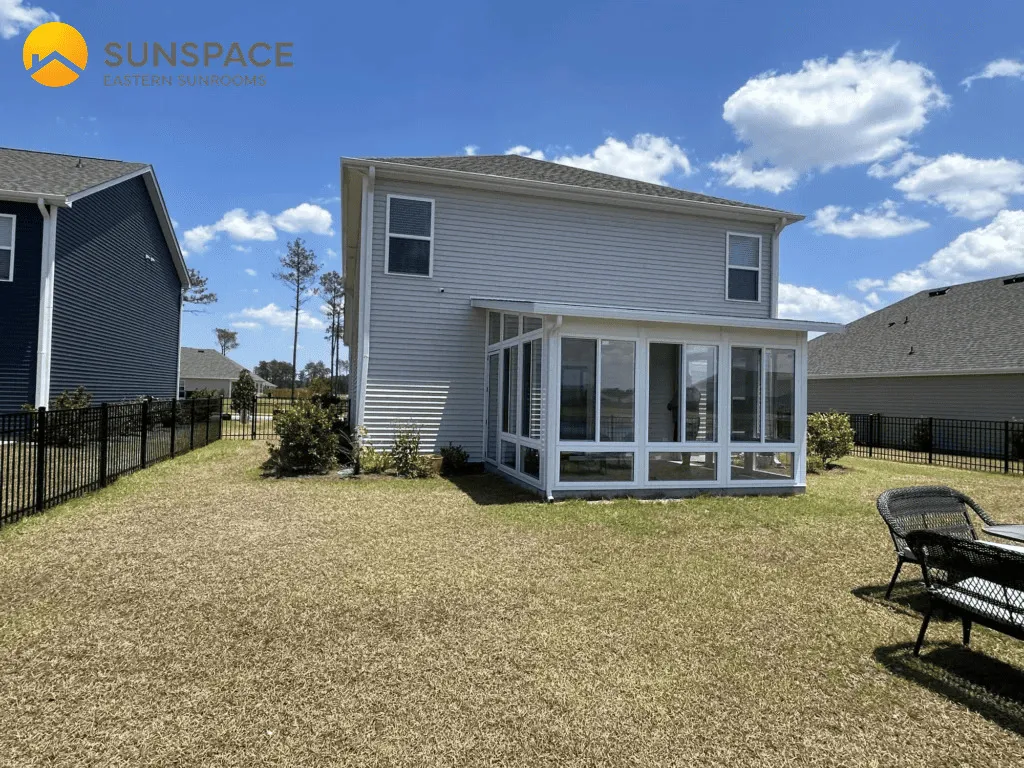
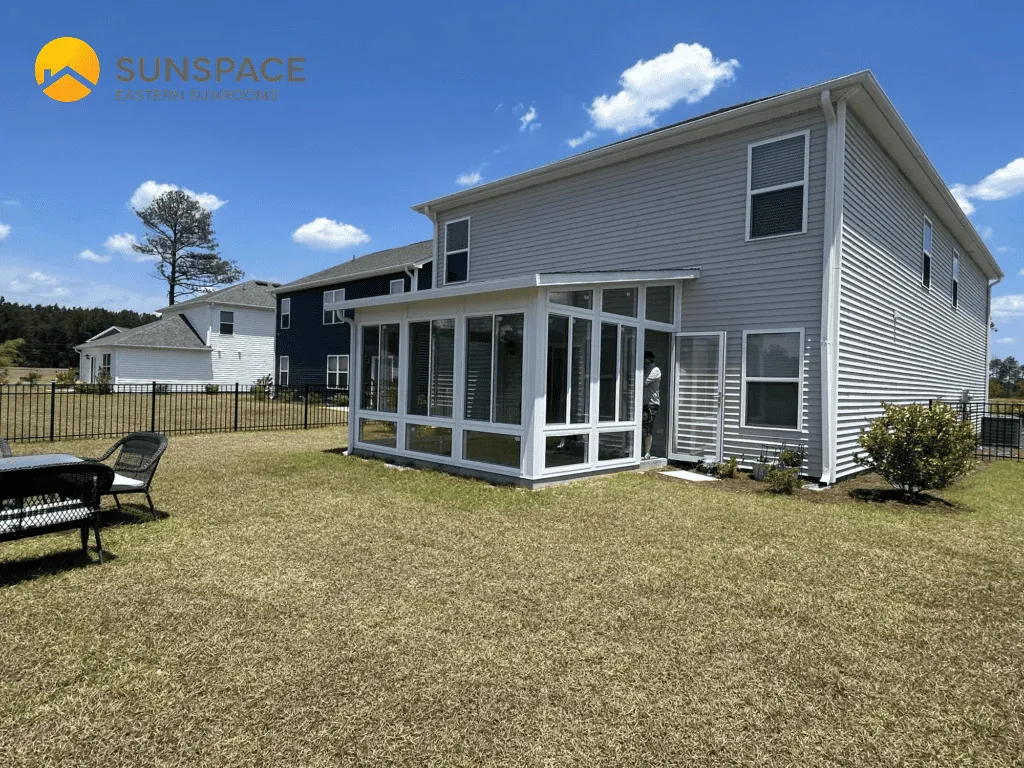
Real Sunrooms in Coastal North Carolina
The best way to compare sunroom systems is to see how homeowners actually use them.
A 3-season room may become the place where a family drinks coffee every morning, watches summer storms roll through, or enjoys dinner without mosquitoes.
A 4-season room may become a home office, reading room, playroom, or gathering space used every day of the year.
The right system depends less on which room is “better” and more on what you want the room to do for your life.
3-Season vs. 4-Season Sunroom FAQs
Is a 3-season sunroom usable during winter in Wilmington, NC?
Sometimes, depending on the weather, room orientation, sun exposure, insulation, and whether supplemental heat is used. Wilmington’s climate can make a 3-season room comfortable for long periods of the year, but it is not designed to maintain the same consistent indoor temperature as a true four-season room.
What is the difference between the Model 200 and Model 300 sunrooms?
Both are 3-season rooms. The primary difference is the window system. The Model 200 uses WeatherMaster ViewFlex vinyl panels and can provide up to 75% ventilation. The Model 300 uses single-glazed tempered safety glass and provides up to 50% ventilation.
What is the difference between a 3-season and 4-season sunroom?
A 3-season sunroom is designed primarily for comfortable use during mild weather and relies more heavily on natural ventilation. A true 4-season sunroom uses insulation, higher-performance glass, thermal breaks, and an insulated roof system to support year-round comfort.
Is a 4-season sunroom considered living space?
That depends on the specific construction, local building requirements, permits, heating and cooling, and how the room is classified. A professionally designed four-season room may function like an extension of the home, but homeowners should not assume every enclosed room automatically qualifies as a finished living area.
Does a 4-season sunroom need its own HVAC system?
Not necessarily. Heating and cooling options depend on the room’s size, design, location, existing home systems, and local requirements. Options may include extending an existing system when appropriate or using a separate heating and cooling solution.
Which sunroom is best for coastal humidity?
It depends on how you plan to use the space. A Model 200 offers substantial natural ventilation, while the Model 400 provides the insulation and thermal construction better suited to homeowners who want a controlled year-round indoor environment.
Which sunroom provides the most ventilation?
The Model 200 WeatherMaster Vinyl Sunroom offers up to 75% ventilation. The Model 300 Glass Sunroom offers up to 50% ventilation.
Can I turn my existing screened porch into a sunroom?
Often, yes. Many existing porches can be converted into enclosed rooms, but the roof, framing, foundation or flooring, drainage, and opening dimensions should be evaluated first.
Is a 4-season sunroom always better than a 3-season sunroom?
No. A four-season room provides greater insulation and year-round comfort, but not every homeowner needs or wants that. If your priority is fresh air, natural ventilation, weather protection, and a more affordable porch conversion, a 3-season room may be the better fit.
Still Not Sure Which Sunroom Is Right for You?
You do not have to decide between a Model 200, Model 300, and Model 400 based on specifications alone.
The best choice depends on your home, your budget, your location, how much sun and shade the room receives, and most importantly, how you want to live in the space.
Eastern Sunrooms has been helping homeowners throughout Wilmington and southeastern North Carolina create sunrooms and porch enclosures built for coastal living.
We will visit your home, look at the existing space, answer your questions, and help you compare your options without pressure.
Free in-home consultation. No pressure. No obligation. Just honest advice from a local team that knows sunrooms and the North Carolina coast.
<script type="application/ld+json">
{
  "@context": "https://schema.org",
  "@type": "FAQPage",
  "mainEntity": [
    {
      "@type": "Question",
      "name": "Is a 3-season sunroom usable during winter in Wilmington, NC?",
      "acceptedAnswer": {
        "@type": "Answer",
        "text": "Sometimes, depending on the weather, room orientation, sun exposure, insulation, and whether supplemental heat is used. Wilmington's climate can make a 3-season room comfortable for long periods of the year, but it is not designed to maintain the same consistent indoor temperature as a true four-season room."
      }
    },
    {
      "@type": "Question",
      "name": "What is the difference between the Model 200 and Model 300 sunrooms?",
      "acceptedAnswer": {
        "@type": "Answer",
        "text": "Both are 3-season rooms. The primary difference is the window system. The Model 200 uses WeatherMaster ViewFlex vinyl panels and can provide up to 75% ventilation. The Model 300 uses single-glazed tempered safety glass and provides up to 50% ventilation."
      }
    },
    {
      "@type": "Question",
      "name": "What is the difference between a 3-season and 4-season sunroom?",
      "acceptedAnswer": {
        "@type": "Answer",
        "text": "A 3-season sunroom is designed primarily for comfortable use during mild weather and relies more heavily on natural ventilation. A true 4-season sunroom uses insulation, higher-performance glass, thermal breaks, and an insulated roof system to support year-round comfort."
      }
    },
    {
      "@type": "Question",
      "name": "Is a 4-season sunroom considered living space?",
      "acceptedAnswer": {
        "@type": "Answer",
        "text": "That depends on the specific construction, local building requirements, permits, heating and cooling, and how the room is classified. A professionally designed four-season room may function like an extension of the home, but homeowners should not assume every enclosed room automatically qualifies as a finished living area."
      }
    },
    {
      "@type": "Question",
      "name": "Does a 4-season sunroom need its own HVAC system?",
      "acceptedAnswer": {
        "@type": "Answer",
        "text": "Not necessarily. Heating and cooling options depend on the room's size, design, location, existing home systems, and local requirements. Options may include extending an existing system when appropriate or using a separate heating and cooling solution."
      }
    },
    {
      "@type": "Question",
      "name": "Which sunroom is best for coastal humidity?",
      "acceptedAnswer": {
        "@type": "Answer",
        "text": "It depends on how you plan to use the space. A Model 200 offers substantial natural ventilation, while the Model 400 provides the insulation and thermal construction better suited to homeowners who want a controlled year-round indoor environment."
      }
    },
    {
      "@type": "Question",
      "name": "Which sunroom provides the most ventilation?",
      "acceptedAnswer": {
        "@type": "Answer",
        "text": "The Model 200 WeatherMaster Vinyl Sunroom offers up to 75% ventilation. The Model 300 Glass Sunroom offers up to 50% ventilation."
      }
    },
    {
      "@type": "Question",
      "name": "Can I turn my existing screened porch into a sunroom?",
      "acceptedAnswer": {
        "@type": "Answer",
        "text": "Often, yes. Many existing porches can be converted into enclosed rooms, but the roof, framing, foundation or flooring, drainage, and opening dimensions should be evaluated first."
      }
    },
    {
      "@type": "Question",
      "name": "Is a 4-season sunroom always better than a 3-season sunroom?",
      "acceptedAnswer": {
        "@type": "Answer",
        "text": "No. A four-season room provides greater insulation and year-round comfort, but not every homeowner needs or wants that. If your priority is fresh air, natural ventilation, weather protection, and a more affordable porch transformation, a 3-season room may be the better fit."
      }
    }
  ]
}
</script>