
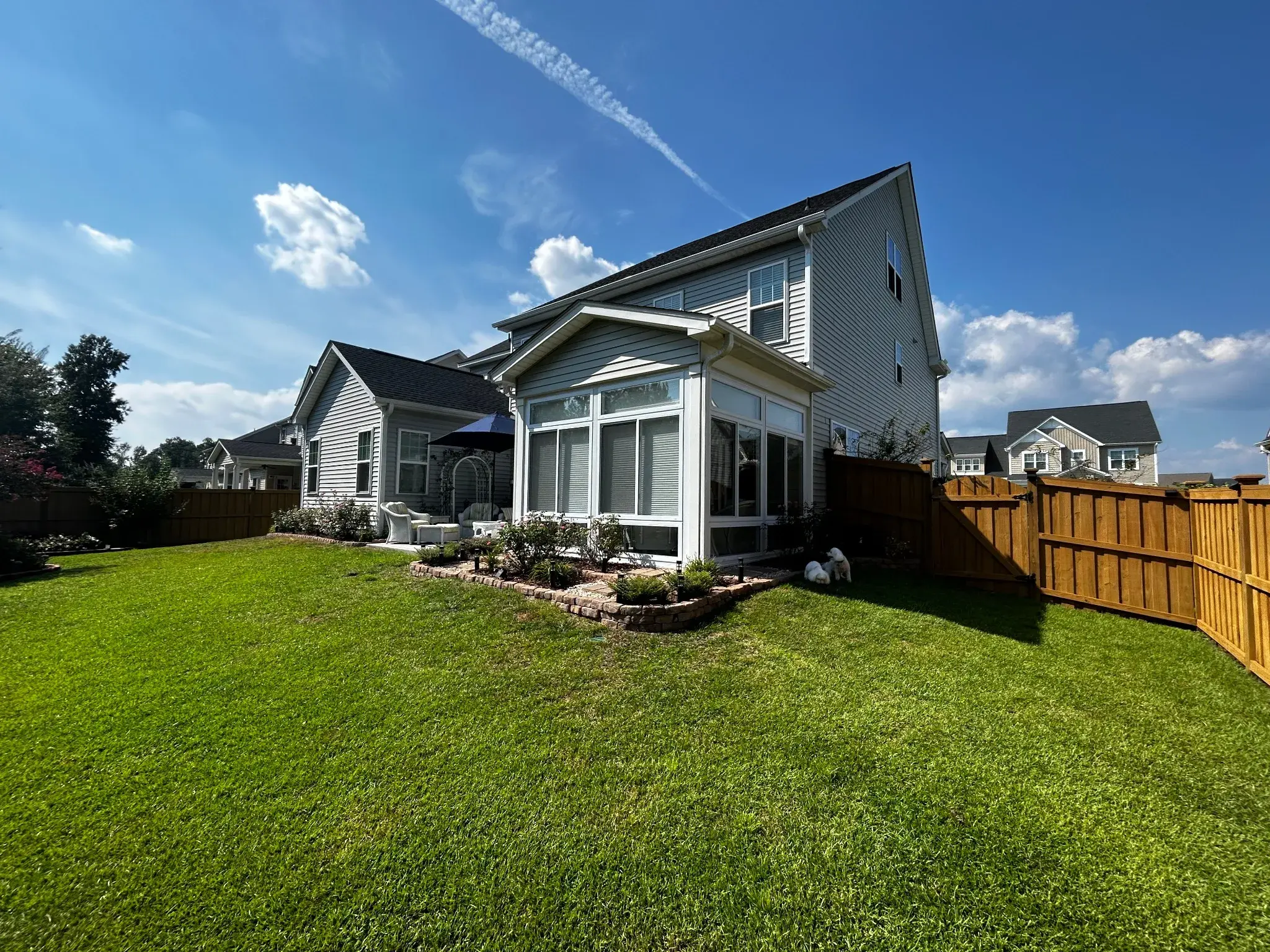
It’s one of the most common questions homeowners in Wilmington ask when they’re planning an outdoor living addition. Both a screened porch and a sunroom give you more usable space connected to your home. Both protect you from rain and bugs. But beyond those shared basics, they’re quite different structures that serve different needs.
The honest answer is that neither one is universally better. It depends entirely on how you plan to use the space, what your budget looks like, and how many months of the year you want the room to be comfortable. This article breaks down both options clearly so you can figure out which one actually fits your life.
Not sure which direction makes sense for your home? Speak with a specialist before committing to a design.
Homeowners in coastal NC who are exploring Porch and sunroom services in Wilmington often tell us they came in thinking they wanted one thing, then changed direction after a more detailed conversation about how they live. That’s a normal part of the process.
What Each Structure Actually Is
Before comparing them, it’s worth being specific about what each term means, because “screened porch” and “sunroom” get used loosely in ways that don’t always reflect how different they can be.
A screened porch is an existing or new covered porch space fitted with screen mesh panels. The screens keep insects out while letting air, light, and sound pass through freely. It’s an open-air space with a roof. No glass, no insulation, no climate control.
A sunroom is a glass-walled enclosed structure attached to your home. Depending on the type, it can be a simple three-season space with basic glazing, or a fully insulated four-season room with its own heating and cooling. The key distinction is that it’s enclosed with solid glazing panels, not screen mesh.
Some structures sit in the middle. A porch with WeatherMaster or porch window systems, for example, gives you adjustable panels that open like a screen room and close like an enclosed sunroom. That’s a meaningful middle-ground option worth knowing about, and we’ll cover it below.
Where a Screened Porch Wins
A screened porch has genuine advantages that a sunroom can’t replicate. It’s not simply a cheaper or lesser version of a sunroom. For the right homeowner, it’s the better choice.
The open-air feel is real: You hear the rain. You feel the breeze. You smell the yard. For many people, that connection to the outdoors is exactly what they want. A fully enclosed sunroom, even one with operable windows, doesn’t deliver quite the same experience.
Lower upfront cost: A screened porch involves less material and less construction complexity than a sunroom. If your primary goal is a bug-free outdoor sitting space and budget is a real constraint, a screened porch gets you there more affordably.
Simpler permitting in many cases: Depending on your municipality, a basic screened porch addition may require less permitting than an enclosed sunroom addition that’s classified as conditioned living space.
Easier to retrofit: If you already have a covered porch, adding screen panels is one of the least invasive upgrades available. You’re not changing the roof system or the floor, just adding an enclosure to the walls.
Where a Screened Porch Falls Short
The limitations of a screened porch are real, and they matter a lot in a coastal NC climate.
Bugs get through: Standard screen mesh stops most insects, but no-see-ums, which are extremely common in Wilmington’s coastal environment, pass right through standard mesh openings. Tighter no-see-um mesh is available but reduces airflow noticeably.
Rain blows in: A screened porch has no protection from wind-driven rain. During coastal storms, even a well-built screened porch can get wet inside, which limits your ability to leave furniture out or use the space during weather events.
Seasonal use only: In Wilmington’s heat and humidity, a screened porch without any cooling is genuinely uncomfortable from June through August. You’re not going to be sitting in a screened room at 95 degrees and 85% humidity for any extended stretch. And in winter, even a mild NC winter, a screened porch is cold.
Furniture and décor limits: Because the space isn’t climate-controlled, anything in a screened porch is exposed to humidity swings. That matters for wood furniture, electronics, rugs, and soft furnishings.
Where a Sunroom Wins
A sunroom solves most of the problems a screened porch can’t address. The trade-off is cost and construction complexity.
Year-round comfort is achievable: A properly insulated four-season sunroom with a ductless mini-split runs comfortably in January and in August. That’s a fundamentally different value proposition than a seasonal space. The long-term benefits of adding a thermal sunroom to your home cover how year-round usability changes the math on return over time.
Full weather protection: A sunroom’s glass panels block wind-driven rain completely. Your furniture, flooring, and anything else in the space is protected regardless of what’s happening outside.
No-see-um proof: Glass panels don’t have mesh openings. If coastal insects are a real problem for your household, a sunroom is the most complete solution.
Adds conditioned square footage: An insulated four-season sunroom typically adds to your home’s measured, climate-controlled square footage. That has real implications for home value in ways a screened porch doesn’t.
More versatile use cases: A sunroom can work as a home office, a playroom for kids, a dining room, a sitting room, or a studio. A screened porch, because it’s open to temperature and humidity swings, has limits on what you can reliably do in it.
Where a Sunroom Falls Short
Sunrooms aren’t perfect for everyone.
Higher cost: A three-season sunroom costs more than a screened porch. A four-season insulated sunroom is significantly more. That gap reflects real differences in materials and construction.
Less “outdoor” feeling: If you specifically want to feel like you’re outside, a fully enclosed sunroom with glass walls feels different from a screened porch. The breeze, the sounds, and the sensory connection to the yard are muted.
More permitting and process: An enclosed sunroom, especially a conditioned one, involves more permitting steps, longer timelines, and more site coordination than a screened porch addition.
The Middle-Ground Option Worth Knowing About
Many homeowners don’t realize there’s a meaningful middle option between a basic screened porch and a fully enclosed sunroom. A porch fitted with a WeatherMaster window system gives you adjustable panels that slide or stack to open fully on nice days and close completely when the weather turns.
This kind of setup combines the open-air feel of a screened porch with the weather and insect protection of a more enclosed space. It’s popular in Wilmington precisely because the weather here is changeable enough that you want both options available on the same structure. The Sunspace Model 100 screen room, for example, is specifically designed to upgrade to a Model 200 with WeatherMaster windows at any point, which means you can start at one level and add capability over time.
Side-by-Side Comparison
| Feature | Screened Porch | Sunroom |
| Bug Protection | Good (standard mesh) | Complete |
| Rain Protection | Partial | Full |
| Year-Round Comfort | No | Yes (4-season models) |
| Open-Air Feel | Yes | No |
| Climate Control | No | Yes (with HVAC) |
| Upfront Cost | Lower | Moderate to Higher |
| Home Value Impact | Moderate | Stronger |
| Permitting Complexity | Lower | Moderate to Higher |
| Furniture Protection | Limited | Full |
How to Decide Which One Is Right for You
Ask yourself these questions honestly:
- How many months do you want to use the space? If the answer is year-round, a screened porch isn’t going to get you there without significant discomfort in summer and winter.
- How bothered are you by bugs? If no-see-ums are already a problem in your yard, standard screen mesh may not solve it the way you’re hoping.
- Do you want to feel outside or protected from the outside? That’s a personal preference, and it genuinely matters which structure you’ll enjoy.
- Is home value part of the calculation? An enclosed sunroom has a stronger impact on your home’s formal square footage and resale value than a screened porch.
- What’s your realistic budget? A screened porch is more accessible for tighter budgets. A sunroom, particularly an insulated four-season model, is a larger investment but one that returns more usable months per year.
If you’re on the fence, the 3-season vs 4-season sunroom guide for Wilmington can help you think through the spectrum of enclosed space options before you make a final call on structure type.
Frequently Asked Questions
Can I convert a screened porch into a sunroom later?
Yes, and it’s a common upgrade path. An existing screened porch with a sound roof and floor structure can often be enclosed with glass panels or a full sunroom system over time. Starting with a screen room and upgrading to a WeatherMaster enclosure, for example, is a planned option with some systems.
Do screened porches add value to a home?
Yes, but typically less than an enclosed sunroom. Screened porches improve livability and buyer appeal, but they don’t add conditioned square footage to the home’s formal appraisal the way a four-season sunroom does.
Is a sunroom too hot in a Wilmington summer?
A poorly designed or under-insulated sunroom can get very warm in summer. A properly built four-season sunroom with Low-E glass, adequate roof insulation, and a mini-split cooling unit should hold comfortable temperatures even in July and August.
What’s the most bug-proof outdoor space option?
A fully enclosed sunroom with glass panels offers complete insect protection. If you prefer an open-air feel with better-than-standard bug control, no-see-um mesh is available for screen rooms, though it does reduce airflow.
How long does it take to build a screened porch vs a sunroom?
A basic screened porch addition on an existing covered structure can be completed more quickly. A full sunroom installation in the Wilmington area typically runs 12 to 18 weeks from contract to completion, accounting for permitting and material lead times.
Talk It Through Before You Build
These decisions are easier when you can walk someone through your specific property, your lifestyle, and your budget. Eastern Sunrooms has helped Wilmington homeowners work through exactly this kind of comparison for over a decade. Contact our team for an honest conversation about which structure makes the most sense for your home.